When a storm knocks out the cell towers, radio waves don't care. I keep an ear on the SKYWARN and ARES nets, and when severe weather rolls through Green Country, that same radio sits on my desk in the newsroom — turning spotter reports from the field into warnings the public can act on.
Both licenses are issued and regulated by the Federal Communications Commission (FCC).
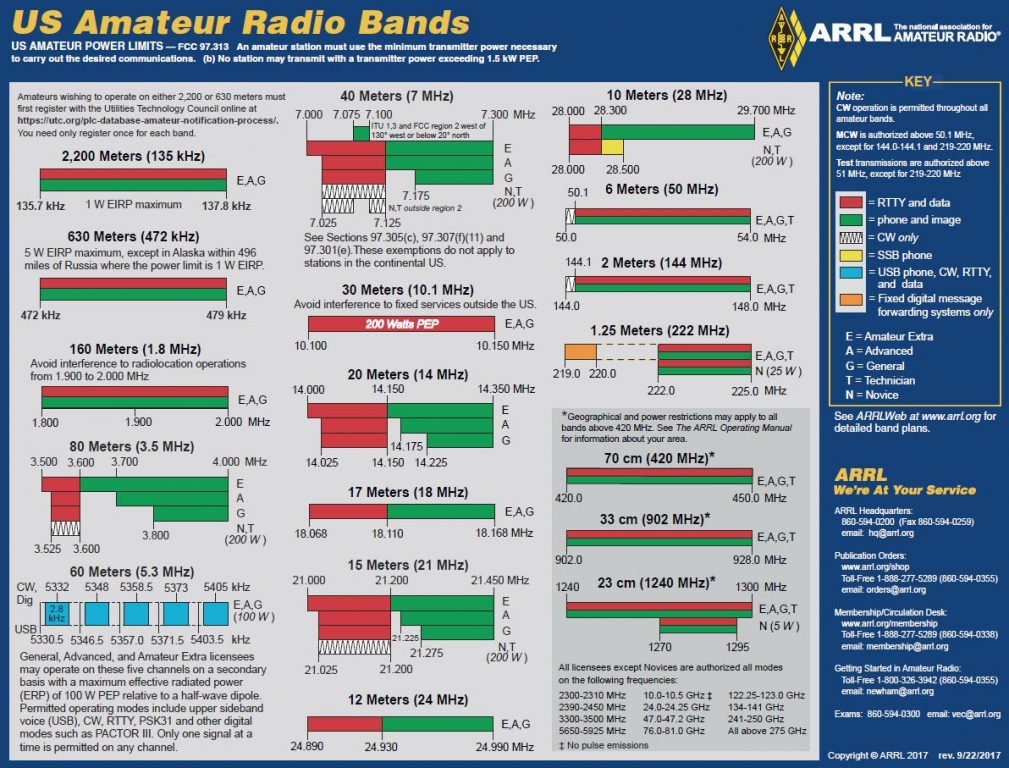
Technician Class license, held since 2007 — authorizing operation across all amateur VHF/UHF bands plus limited HF privileges.
Family/household GMRS license, held since 2022 — covering short-range UHF radios used for local and family communications.
The American Radio Relay League (ARRL) is the national association for Amateur Radio in the United States, founded in 1914. It represents hams before the FCC and Congress, publishes QST magazine, administers license exams, and coordinates national emergency communications training through the Amateur Radio Emergency Service (ARES).
arrl.org →The Federal Communications Commission licenses and regulates both the Amateur Radio Service and the General Mobile Radio Service in the U.S. Amateur licenses require passing a written exam administered by volunteer examiners; GMRS licenses cover a household and require no exam, valid for a 10-year term.
fcc.gov/amateur-radio →The FCC issues three amateur license classes, each unlocking more of the radio spectrum.
Cell phones depend on nearby towers and the networks behind them — useful, but only within a few miles of working infrastructure, and only as long as that infrastructure survives. A storm, an outage, or a disaster can take all of it down at once.
Amateur radio doesn't need any of it. No cell towers, no internet, no wired network — a station can go up almost anywhere in minutes, running on battery or generator power, and keep communication moving when every other system has failed.
That independence is why the FCC's own rules recognize Amateur Radio as a public service resource, and why FEMA has built it directly into the national framework used to manage emergencies.
W5IAS — established in 1924, the oldest amateur radio club in Oklahoma. Club members run the local weather net during severe storms, feeding spotter reports directly to the National Weather Service, and support ARES and community events year-round.
w5ias.com →A volunteer network of roughly 350,000–400,000 trained severe weather spotters nationwide, relaying real-time, ground-level reports to the National Weather Service. Radio is often the only way to get that report out during the storm itself.
WX5TUL – Tulsa SKYWARN →The Federal Emergency Management Agency coordinates the nation's response to disasters — and formally recognizes Amateur Radio as part of that response, building it directly into national incident management guidance.
fema.gov →OKMRC organizes medical, public health, and community volunteers statewide to support emergencies and disasters — and explicitly includes amateur radio operators among the non-medical volunteers who keep emergency communications running.
oklahoma.gov/okmrc →The Amateur Radio Emergency Service is an ARRL program of licensed volunteers who provide communications for served agencies — emergency management, the Red Cross, local government — during disasters, and at public events like races and parades as standing practice.
The ARES Position Task Book, customized for Tulsa County, tracks and documents training progress across three levels — basic, intermediate, and advanced.
PDF Coming SoonDuring severe weather, I run a ham radio right from my desk in the newsroom, maintaining a critical communications link independent of phones or the internet. It lets me pull real-time reports directly from NWS-trained storm spotters on the ground and relay them straight to our weather team as the storm is still happening — helping push accurate, timely information to the public in an effort to save lives.
A running list of what's actually on the air — radios, antennas, and the gear that keeps the station up.
End of Transmission
← Back to Home